Втората предварителна версия на GS1 за цифровия продуктов паспорт внася важно уточнение: Near Field Communication (NFC) може да допълва достъпа до продуктови данни, но не трябва да заменя двуизмерния носител на данни. За производителите това не е призив незабавно да поставят допълнителен чип върху всеки продукт. По-скоро това е архитектурна насока: един продукт може да има няколко физически начина за достъп, но всички те трябва да водят към една и съща надеждна продуктова идентичност.
Причината е конкретна. GS1 представя публикуваната през юни 2026 г. версия като актуализиран предварителен DPP-стандарт след работа по Individual Trade Item Pieces (ITIP) и NFC. Документът на GS1 за втората предварителна версия същевременно недвусмислено посочва, че това все още не е ратифициран стандарт на GS1 и че съдържанието може да се промени преди ратификацията. Именно затова публикацията е подходяща за техническа подготовка, но не и като единствена основа за задължителни изисквания при снабдяване.
Какво определя ЕС – и какво все още е открито
ESPR-Регламент (ЕС) 2024/1781 определя правната рамка. Съгласно член 9 делегираните актове за отделните продуктови групи определят, наред с другото,
- дали да се използва един или повече носители на данни,
- къде да бъдат поставени,
- дали продуктовият паспорт да се поддържа на ниво модел, партида или отделен продукт и
- колко дълго трябва да остане достъпен.
Член 10 изисква свързване на продуктовия паспорт с постоянен уникален продуктов идентификатор. Носителят на данни трябва – в зависимост от съответния правен акт – да се намира върху продукта, опаковката или придружаващите документи. Следователно той не е произволна маркетингова връзка, а физическият мост към определена продуктова идентичност.
Оперативната от 20 юли 2026 г. инфраструктура не променя това разпределение на ролите. Прегледът на Европейската комисия за DPP описва процеса: продуктовата информация се събира, паспортът се регистрира, пълният набор от данни остава при икономическия оператор или доставчик на услуги, а потребителите получават достъп съобразно правата си. По-късно правните актове за отделните продукти ще определят подробности като типа носител, позицията и степента на детайлност.
Следователно е ясно и следното: предварителната версия на GS1 конкретизира възможен стандартизиран начин на прилагане. Тя нито прави NFC общозадължително, нито предопределя решенията на ЕС за отделните продуктови групи.
NFC е допълнителен канал, а не заместител на 2D кода
За DPP предварителната версия на GS1 посочва два визуални носителя:
- QR код със синтаксис на URI за цифровата връзка на GS1,
- Data Matrix със синтаксис на URI за цифровата връзка на GS1.
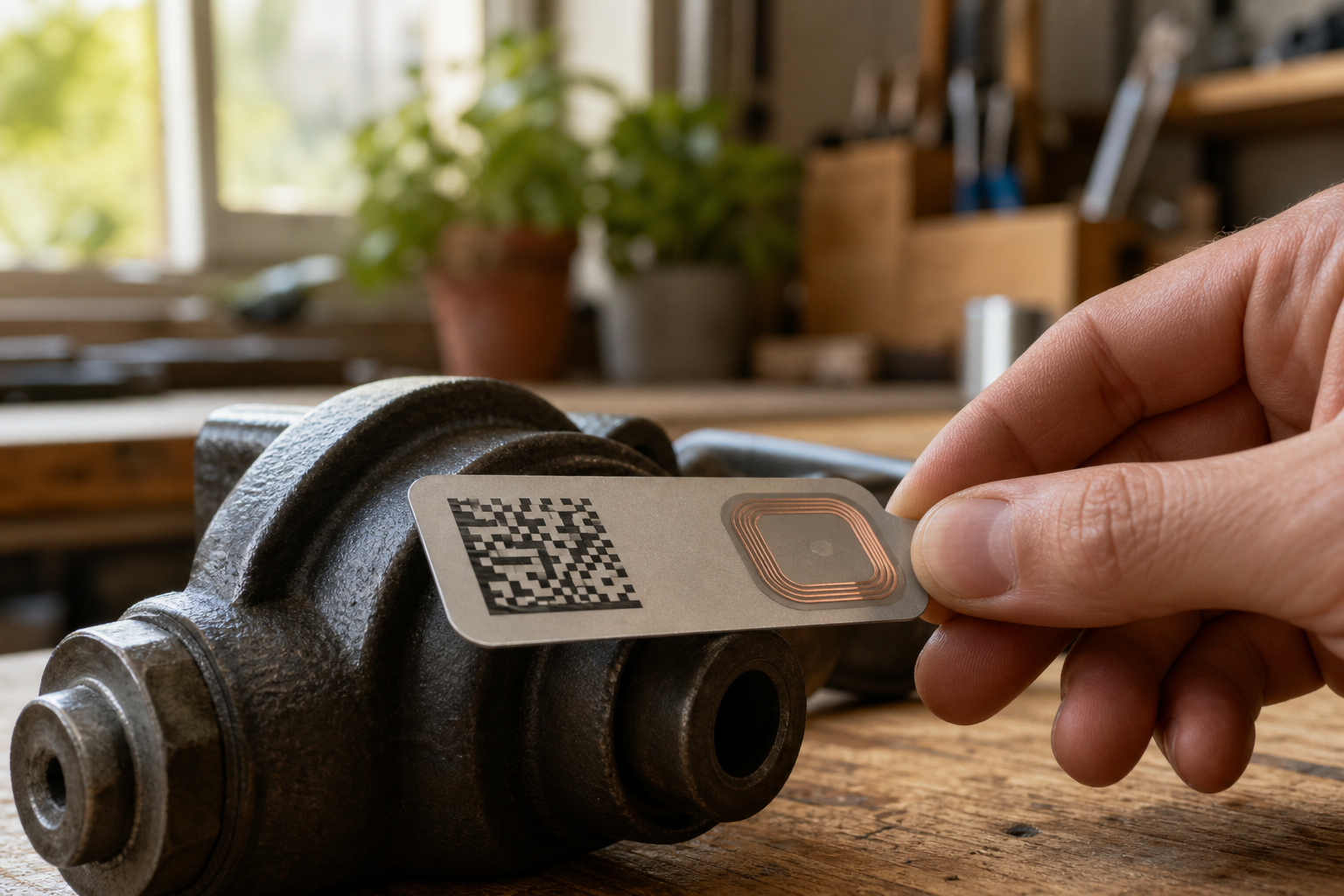
NFC може да се използва допълнително към 2D баркода. За EPC/RFID по време на преходен период също се предвижда допълващ подход. Особено ясно е обяснението при NFC: носителят не трябва да бъде предлаган като възможен заместител на 2D, тъй като е неподходящ за използване в отворената верига на доставки.
Това разграничение има практическо значение. Човек може да види 2D код и да го сканира с вградената камера на смартфона. Той може да бъде отпечатан, проверен визуално и разпознаван на различни етапи от процеса. NFC, от друга страна, позволява удобно приближаване или докосване, но остава невидим и изисква съвместима техника за четене, както и ясно обозначаване на точката за взаимодействие.
Затова NFC тагът може да е полезен, когато продуктът така или иначе съдържа електроника, носителят трябва да бъде защитен от замърсяване или износване или безконтактният достъп носи предимства в сервизните процеси. Той обаче не решава автоматично изискванията за отворен, видим и широко използваем достъп. Архитектура, основана само на NFC, според днешния предварителен модел на GS1 не би била надеждна обща стратегия за DPP.
Двата носителя трябва да пренасят една и съща идентичност
Най-важният технически въпрос не е радиочипът, а съгласуваността на идентичността. Когато елементите от данни присъстват в няколко носителя, те трябва да имат една и съща стойност. Това се отнася например до GTIN и – при идентификация на ниво отделен продукт – до серийния номер.
Типична грешка би била отпечатаният код да се генерира от системата за опаковки, а NFC тагът да се записва от отделна база данни на устройствата. Дори малки разлики в серийните номера, водещите нули или обозначенията на версиите могат да създадат две на пръв поглед валидни, но противоречиви идентичности. Тогава продуктовият паспорт ще бъде технически достижим, но вече няма да е еднозначно свързан с физическия продукт.
Затова надеждната последователност е следната:
- Първо се определя водещата продуктова идентичност.
- От нея се генерира каноничен URI за цифровата връзка на GS1.
- Същата идентичност се извежда във всички предвидени носители.
- Автоматизирано сравнение проверява QR кода, Data Matrix и NFC спрямо основните данни.
Това правило съответства и на принципа „един продукт, една надеждна входна точка“. Нашият материал за PPWR, QR кода и DPP показва защо един 2D код може да покрива няколко цели. Предварителната версия на GS1 добавя важно ограничение: ако съществуващ стандарт за приложение на GS1 все още не допуска новия 2D носител като алтернатива, временно може да е необходим допълнителен баркод. Следователно „един код за всичко“ е целеви модел, а не общо разрешение.
Какво означава втората версия за ITIP и степента на детайлност
Актуализацията разглежда наред с NFC и ITIP, тоест отделни части от търговски артикул, съставен от няколко елемента. Предварителната версия посочва за тази цел идентификатор на приложение 8006 на GS1, но ограничава използването му до определени конфигурации. За предприятията по-малко важен е самият показател, отколкото въпросът зад него: коя физическа единица трябва да получи собствен продуктов паспорт?
Отговорът не трябва да се извежда от желания носител на данни. Той следва приложимия правен акт и бизнес процеса:
- Паспортът на модела описва общите характеристики на даден продуктов вариант.
- Паспортът на партидата свързва информацията с производствена партида.
- Паспортът на ниво отделен продукт позволява данни за обслужване, ремонт или жизнен цикъл, свързани с конкретна единица.
- При продукти от няколко части трябва да се изясни дали отделните елементи са самостоятелни продукти или само компоненти на паспорт на по-високо ниво.
Едва след това може да се реши дали GTIN сам по себе си е достатъчен или трябва да бъде квалифициран с партида, версия или сериен номер. Който първо поръча QR кодове или NFC тагове, а после определи степента на детайлност, рискува повторен печат, повторно програмиране и идентичности на наличностите, които не могат да бъдат разрешени.
Надежден план за въвеждане
1. Документирайте договор за идентичността
За всяка продуктова група запишете коя единица се идентифицира, кой предоставя ключа и коя система е водеща. Документирайте също как се формират версиите, партидите и серийните номера. Идентификаторът не трябва да зависи от един-единствен канал за извеждане.
2. Матрица на носителите вместо общо решение
Оценявайте QR кода, Data Matrix и NFC поотделно според наличното място, материала, експлоатационния живот, дистанцията на четене, целевата група и съществуващата технологична среда. Символът Data Matrix може да е по-подходящ за малки или цилиндрични части; QR кодът е естественият избор за достъп с камерата на смартфон; NFC може да допълва сервизните процеси. Окончателният избор зависи от правния акт за конкретния продукт.
3. Използвайте единен слой за разрешаване
Всички носители трябва да водят към стабилен и контролиран механизъм за разрешаване. Съдържанието може да се променя през жизнения цикъл на продукта, без физическата идентичност да се задава наново. Материалът за GS1 Sunrise 2027 обяснява как 2D кодът може да свърже търговски и информационни процеси.
4. Тествайте автоматично съответствието
Проверявайте не само дали и двата носителя „отварят нещо“. Тестът за одобрение трябва най-малкото да потвърждава:
- извлеченият продуктов ключ и квалификаторите са идентични,
- каноничният целеви адрес е правилен,
- мобилните устройства достигат публично предоставената информация,
- защитените роли не получават по погрешка публични данни,
- повредените или остарели носители водят до ясно определено състояние на грешка и
- разрешаването остава стабилно и след промени в съдържанието.
5. Третирайте предварителните правила като променливи
Обозначете техническите решения, които произтичат пряко от втората предварителна версия на GS1. Така те могат целево да бъдат преглеждани при ратификация, последващи промени на GS1 или специфични за продуктите изисквания на ЕС. Закупуването на хардуер не трябва да бъде толкова тясно специфицирано, че последваща промяна в избора на носител да блокира целия продуктов дизайн.
Заключение
Новата предварителна версия на GS1 измества фокуса от „QR или NFC?“ към „една идентичност, няколко контролирани начина за достъп“. В предложения модел 2D кодът остава видимата и отворена основа. NFC може да подобри използването, ако се прилага допълнително, записва се от същия източник на идентичност и се проверява спрямо отпечатания носител.
За предприятията сега е подходящият момент да подготвят процесите за идентичност, разрешаване и тестване. От това не може да се изведе общо задължение за NFC таг. Също толкова малко предварителната публикация вече представлява ратифициран стандарт. Изборът на носител и степента на детайлност ще станат задължителни едва във взаимодействие със съответните правни актове на ЕС и окончателните стандарти.