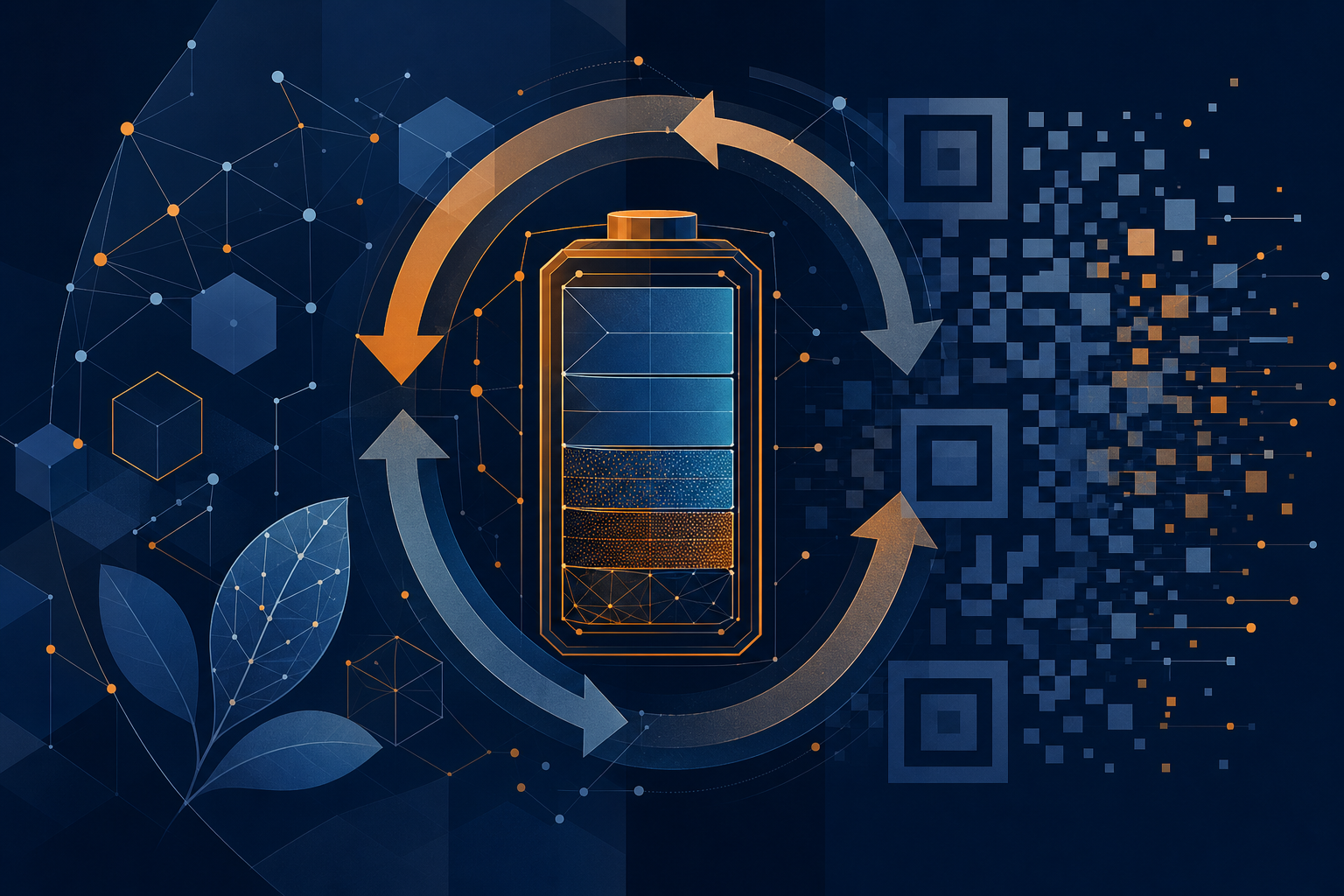
Pourquoi « remplir une seule fois » ne suffit pas
Le passeport numérique de batterie (DBP) n’est pas une fiche de données statique. Le règlement sur les batteries (UE) 2023/1542 prévoit expressément que certains points de données doivent rester actualisables pendant tout le cycle de vie d’une batterie. Celui qui remplit son passeport une seule fois lors de la mise sur le marché et ne le met ensuite plus à jour ne satisfait pas pleinement aux exigences — et risque de sérieux problèmes de conformité à partir du 18 février 2027.
Cela semble aller de soi, mais constitue en pratique un problème opérationnel considérable. Le rapport d’implémentation de Minespider 2026 identifie deux faiblesses structurelles qui traversent l’ensemble du secteur : la fragmentation des données le long de la chaîne d’approvisionnement et l’absence de processus pour les mises à jour dynamiques des données. Ces deux problèmes peuvent être résolus — mais uniquement au moyen d’une stratégie technique et organisationnelle claire.
Ce qui doit changer et quand : les trois catégories de mise à jour
Tous les champs de données du DBP ne sont pas soumis aux mêmes obligations d’actualisation. Il est utile de distinguer dès le départ trois catégories :
1. Données de référence statiques (une seule fois lors de la mise sur le marché)
Il s’agit notamment de la chimie, de la technologie des cellules, de l’identification du fabricant et du numéro de série. Ces champs sont définis lors du premier remplissage et ne changent pas. Ils constituent le noyau immuable du passeport.
2. Données d’empreinte carbone propres au lot (une seule fois, mais de manière granulaire)
L’empreinte carbone spécifique au produit (PCF) doit être calculée selon les méthodes de la norme ISO 14067-kompatiblen et indiquée au niveau du lot. Le projet du JRC de la Commission européenne précise qu’une agrégation entre différents sites de production n’est pas autorisée. Chaque modèle de batterie reçoit sa propre valeur de PCF pour chaque site de production. Cela signifie qu’un nouvel enregistrement doit être créé pour chaque nouveau lot et associé au passeport correspondant — pas de copier-coller du modèle précédent.
En pratique, cela signifie que si votre système de production ne fournit pas de calculs de CO₂ propres à chaque lot, vous devez adapter le processus en amont avant même de pouvoir remplir le passeport.
3. Données d’état (en continu, pendant tout le cycle de vie)
C’est la catégorie la plus exigeante. Le State of Health (SoH) et le State of Charge (SoC) évoluent à chaque cycle de charge et de décharge. Pour les batteries réutilisées dans une seconde vie — par exemple comme stockage stationnaire après leur utilisation dans un véhicule électrique — des données d’état à jour ne sont pas seulement prescrites par la réglementation, elles sont aussi économiquement pertinentes : sans indications fiables sur le SoH, il est impossible de déterminer une valeur de marché équitable sur le marché de la seconde vie.
La mise en œuvre technique : comparaison de trois approches
Comment les données sont-elles intégrées au passeport ? Et comment restent-elles à jour ? Il existe essentiellement trois approches architecturales :
| Approche | Adaptée à | Avantage | Risque |
|---|---|---|---|
| Push via API REST | Fabricants disposant de leur propre MES/ERP | Entièrement automatisée, compatible avec le temps réel | Dépendance à l’infrastructure informatique interne |
| Import en masse (CSV/JSON) | Fournisseurs sans connexion API | Seuil d’entrée bas | Sources d’erreurs manuelles, retards |
| Capteur vers DPP (IoT) | Stockages stationnaires, gestion de flottes | Actualisation continue du SoH | Pipeline de données complexe, fortes exigences de latence |
Pour la plupart des fabricants, une approche hybride sera pertinente : les données de référence et de PCF proviennent de l’ERP via un import en masse ou une API, tandis que les données d’état sont mises à jour par l’intermédiaire d’un pipeline IoT.
Mise à jour par API : un exemple minimal
Quiconque utilise une API REST pour actualiser les données d’état devrait opter pour une structure de points de terminaison versionnée prenant également en charge les mises à jour partielles (PATCH) :
// Beispiel: SoH-Update für eine einzelne Batterie-Seriennummer
const response = await fetch(
  'https://api.example.com/v1/batteries/{serialNumber}/state',
  {
    method: 'PATCH',
    headers: {
      'Content-Type': 'application/json',
      'Authorization': `Bearer ${apiToken}`,
    },
    body: JSON.stringify({
      stateOfHealth: 0.87,        // 87 % Restkapazität
      stateOfCharge: 0.52,        // 52 % aktueller Ladestand
      measuredAt: '2026-06-25T14:30:00Z',
      measurementMethod: 'IEC_62660-1',
    }),
  }
);
L’horodatage (measuredAt) n’est pas un champ facultatif : il est essentiel à la traçabilité et au contrôle par les autorités de surveillance du marché.
Interopérabilité : normes, registre et environnement de test
Une mise à jour est peu utile si le nœud destinataire ne comprend pas les données. C’est précisément là qu’intervient le travail de normalisation. Le 25 juin 2026, le CEN et le CENELEC ont organisé un webinaire public sur les normes DPP récemment publiées, EN 18216 à EN 18223. Ces six normes, élaborées par le comité technique JTC 24, définissent le cadre intersectoriel pour l’interopérabilité et la cohérence des données — autrement dit, la couche même sur laquelle les processus de mise à jour doivent être standardisés.
Parallèlement, le consortium BatteryPass-Ready a lancé le 24 juin 2026 un environnement de test public pour le passeport numérique de batterie. Les fabricants, fournisseurs et éditeurs de logiciels peuvent y valider leurs implémentations au regard des exigences réglementaires — avant même le début de l’exploitation réelle. Toute organisation qui met en place des processus de mise à jour devrait utiliser cet environnement rapidement afin de tester les formats de données et la compatibilité des API.
Le registre DPP central de l’UE
La Commission européenne travaille à un registre central grâce auquel tous les DPPs devraient être enregistrés et rendus accessibles. Orgalim — l’association industrielle européenne pour la technologie — a publié à ce sujet des recommandations claires : le registre doit prendre en charge des processus d’enregistrement automatisés à haut volume et être protégé contre les interruptions de service. Pour les processus de mise à jour, cela signifie que votre architecture interne doit continuer à fonctionner même lorsque le registre central est temporairement indisponible — prévoyez donc une mise en cache locale et une logique de nouvelle tentative.
Le lien entre la batterie physique et le passeport numérique est établi en pratique au moyen d’un GS1 Digital Link — un URI normalisé qui code GTIN et le numéro de série et pointe vers l’enregistrement correspondant. Ce lien est généralement encodé dans un code QR apposé sur l’étiquette de la batterie.
Conditions organisationnelles : qui est responsable des mises à jour ?
Le règlement s’adresse en premier lieu à l’opérateur économique qui met la batterie sur le marché. Mais les données d’état sont souvent générées loin du fabricant — chez l’opérateur de flotte, l’entreprise de recyclage ou le fournisseur de solutions de seconde vie. La question des droits d’écriture n’est donc pas purement technique : elle doit être réglée par contrat.
Les rôles suivants devraient être clairement définis dans votre structure de gouvernance :
- Propriétaire des données : qui est autorisé à écrire et à remplacer quels champs ?
- Piste d’audit : chaque modification doit être consignée avec son horodatage et son auteur — non seulement pour la conformité, mais aussi en cas de litige sur le marché de la seconde vie.
- Processus d’urgence : que se passe-t-il lorsqu’un capteur tombe en panne ou qu’un fournisseur ne transmet pas les données ?
Des solutions telles que le partenariat entre Bureau Veritas et Circulor montrent comment les organismes de contrôle et les fournisseurs de données se rapprochent pour combler précisément ces lacunes de gouvernance. Securikett se positionne de manière similaire avec sa plateforme Codikett 2.0 : des étiquettes inviolables qui relient physiquement l’enregistrement au produit et compliquent les accès en écriture non autorisés.
Liste de contrôle : préparation aux mises à jour d’ici février 2027
Avant de considérer votre processus DBP comme « terminé », vous devriez avoir vérifié les points suivants :
- Le calcul du PCF est mis en œuvre au niveau du lot (et non agrégé au niveau du modèle)
- Le pipeline de données SoH/SoC est en place et testé
- Les points de terminaison de l’API prennent en charge les mises à jour partielles (PATCH) avec horodatage
- Les droits d’écriture sont réglés par contrat avec tous les acteurs concernés
- La logique de nouvelle tentative en cas de défaillance du registre est implémentée
- L’implémentation a été validée dans l’environnement de test BatteryPass-Ready
- GS1 Digital Link est correctement encodé sur l’étiquette et dans le code QR
Février 2027 approche. Ceux qui ne mettront en place les processus de mise à jour qu’une fois l’obligation entrée en vigueur constateront que le véritable travail ne consiste pas à remplir le passeport — mais à le maintenir correctement à jour pendant des années.
Sources
- Règlement européen sur les batteries 2027 : liste de contrôle du passeport numérique de batterie - Crunch-IS
- Passeport numérique de batterie de l’UE : exigences, calendrier, données et guide de conformité - Carbmee
- Échéances du passeport européen de batterie : comment préparer l’accès au marché de l’UE avant 2027 - DigiProd Pass
- DPP Mise à jour sectorielle de juin 2026 : acier, batteries et projets pilotes GS1 — Blog qr3.app
- Rapport d’implémentation du passeport numérique de batterie 2026 : perspectives du secteur sur la conformité européenne | Minespider
- Règlement européen sur les batteries : guide complet des exigences relatives à l’empreinte carbone
- Guide du règlement européen sur les batteries | Comment calculer les déclarations PCF
- Webinaire « Comment se mettre en conformité avec les législations européennes sur le passeport numérique des produits : guide des normes européennes récemment publiées » - CEN-CENELEC
- EN 18216–18223 : le CEN et le CENELEC publient les premières normes DPP - qr3.app
- BatteryPass-Ready lance un environnement de test pour le passeport numérique de batterie
- Passeport de batterie à partir de 2027 : un nouvel environnement de test pour les entreprises est en ligne - Haufe
- Recommandations pour un registre européen de passeports numériques de produits fiable et opérationnel - Orgalim
- Identification et étiquetage des batteries industrielles et de véhicules électriques | GS1 in Europe
- Passeport européen de batterie : ce que chaque marque doit savoir (2026) - PassportCraft
- Bureau Veritas et Circulor s’associent pour soutenir la conformité relative au passeport de batterie et à la traçabilité de la chaîne d’approvisionnement
- Securikett présente une technologie d’étiquetage pour les passeports numériques de produits - Packaging Insights