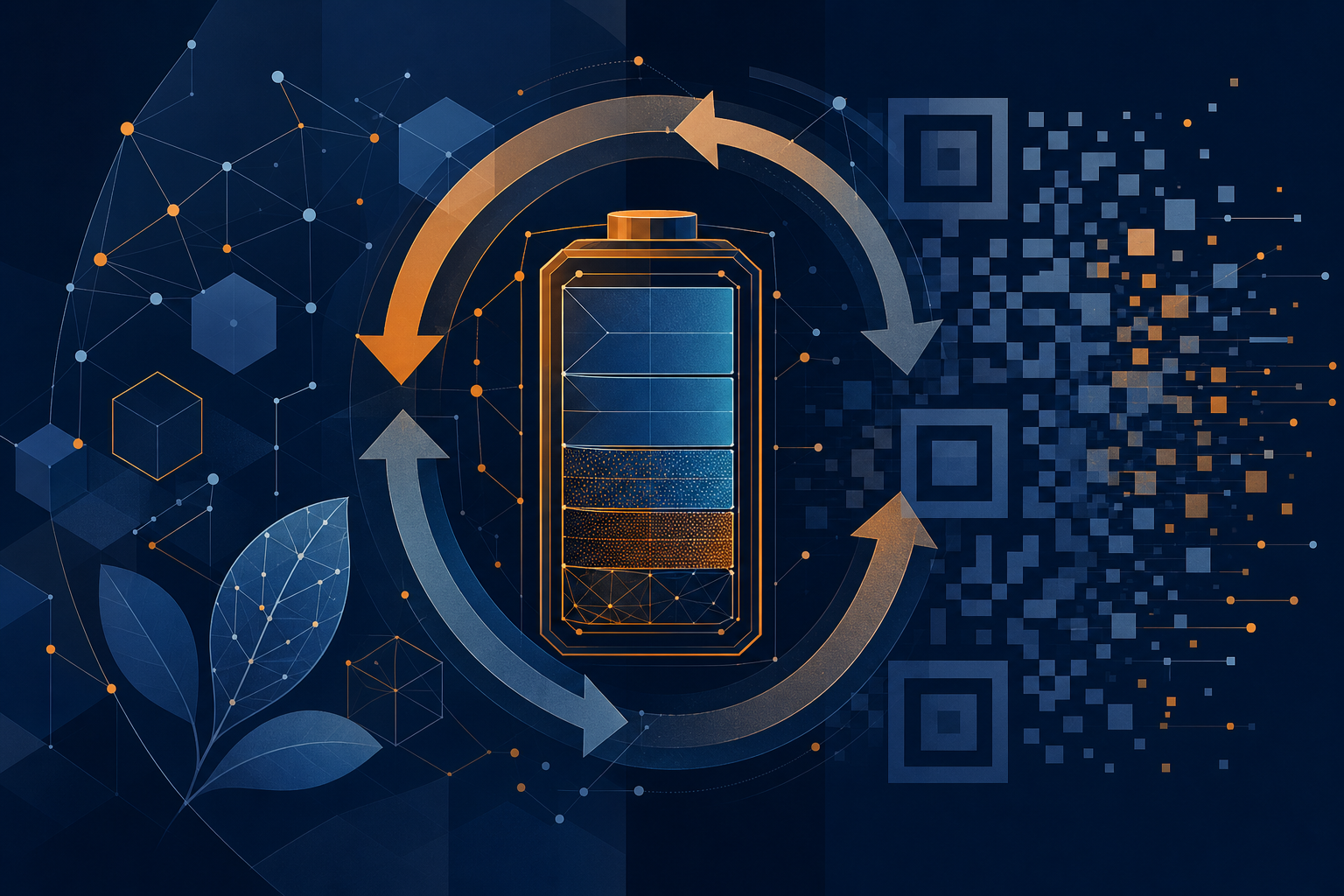
Nedtællingen er begyndt: Fra den 18. februar 2027 skal batterier til lette transportmidler, industribatterier med en kapacitet på mere end 2 kWh og elkøretøjsbatterier være udstyret med et digitalt batteripas (DBP). Det juridiske grundlag er batteriforordningen (EU) 2023/1542, som sammen med den overordnede ESPR-forordning (EU) 2024/1781 fastlægger den bindende ramme for digitale produktpas i EU. Der er mindre end otte måneder til deadline — og branchen er stadig langt fra at være klar til compliance på bred front.
Hvad batteripasset faktisk kræver
Obligatorisk indhold og datastruktur
Det digitale batteripas er ikke en frivillig bæredygtighedserklæring, men et maskinlæsbart dataobjekt, som skal være tilgængeligt via en entydig identifikator — typisk en GS1 Digital Link-kompatibel QR-kode. Forordningen foreskriver blandt andet:
- Produktspecifikt CO₂-aftryk (PCF) på batchniveau, beregnet efter ISO-14067-kompatible metoder. Europa-Kommissionens JRC-udkast præciserer, at PCF-angivelsen ikke må aggregeres på modelniveau, men faktisk skal være batchespecifik.
- Oplysninger om kritiske råstoffer (kobolt, litium, nikkel, mangan), inklusive dokumentation for oprindelse og due diligence-dokumentation i henhold til kravene om ansvarlighed i forsyningskæden.
- Genanvendelighed og andel af genanvendt materiale — både som faktisk værdi og som målværdi for fremtidige produktgenerationer.
- Tilstandsdata (State of Health, State of Charge) for genbrugte batterier på markedet for second-life-produkter.
Det er især PCF på batchniveau, der stiller mange producenter over for betydelige udfordringer: Virksomheder, der stadig beregner med årlige gennemsnitsværdier fra energikøb, vil ikke kunne opfylde kravene.
Teknisk infrastruktur: Resolver og dataadgang
Forordningen foreskriver, at batteripasset skal være tilgængeligt via en offentligt tilgængelig resolver. For slutforbrugere skal en del af dataene kunne hentes uden autentificering; for myndigheder, autoriserede reparationsvirksomheder og genanvendelsesvirksomheder gælder trinvise adgangsrettigheder. Det svarer til princippet for det digitale produktpas, som ESPR definerer som et overordnet koncept: ét produkt, én identifikator, flere datalag med rollebaseret adgang.
Hvor står branchen i dag: To centrale problemer
Minespiders implementeringsrapport fra 2026 analyserer den aktuelle status for forberedelserne til compliance og identificerer to strukturelle problemer, der går på tværs af hele værdikæden:
Problem 1: Datafragmentering
Producenter af battericeller, modulproducenter, systemintegratorer og OEM'er anvender forskellige ERP-systemer, PLM-platforme og kvalitetsstyringssystemer. En sammenhængende, maskinlæsbar datakæde fra råstofudvinding til slutprodukt findes kun i de færreste tilfælde. Det er især kritisk, at PCF på batchniveau kræver data om energiforbruget i produktionen, som på mange fabrikker stadig registreres manuelt eller slet ikke foreligger digitalt.
Problem 2: Dynamiske dataopdateringer
Et batteripas er ikke et statisk dokument. Tilstandsdata ændrer sig gennem hele livscyklussen, tilbagekaldelser kræver øjeblikkelige opdateringer, og genanvendelsesoplysninger skal tilføjes ved afslutningen af brugsfasen. Systemer, der er baseret på uforanderlige PDF-eksporter eller statiske QR-koder, kan grundlæggende ikke opfylde dette krav. Her er brugen af dynamiske QR-koder og central datahåndtering — som muliggør skalerbare implementeringer via masseimport — ikke en komfortfunktion, men en teknisk nødvendighed.
Markedsbevægelser: Hvem positionerer sig nu
De seneste uger har budt på en række relevante markedsudviklinger, der viser, hvordan teknologi- og certificeringsudbydere forbereder sig på deadlinen.
Valideringsinfrastruktur: BatteryPass-Ready
Den 24. juni 2026 åbner BatteryPass-Ready-projektet sit offentlige testmiljø. Virksomheder kan få deres DPP-løsninger valideret i forhold til EU-kravene — neutralt, standardbaseret og uden leverandørafhængighed. Det er et vigtigt skridt, fordi der hidtil ikke har eksisteret en uafhængig kontrolinstans, som kunne give en pålidelig vurdering af, om en konkret implementering er i overensstemmelse med kravene.
Certificering og sporbarhed: Bureau Veritas og Circulor
Bureau Veritas og Circulor har annonceret et strategisk partnerskab, der kombinerer ekspertise inden for test, inspektion og certificering med en digital sporbarhedsplatform. Modellen er symptomatisk for en tendens: Klassiske certificeringshuse erkender, at fysiske audits alene ikke er tilstrækkelige til at sikre datakontinuitet gennem flerleddede forsyningskæder. Digitale sporbarhedssystemer bliver en integreret del af certificeringsprocessen.
Mærkning: Manipulationssikre etiketter og GS1-kompatible tryksystemer
Securikett præsenterede med sin Codikett 2.0-platform en manipulationssikker etiketløsning, der er direkte forbundet med DPP-datahåndteringen. Parallelt har Markem-Imaje lanceret en løsning med CoLOS Software Version 7 til GS1 Digital Link-kompatible 2D-koder på industrielle tryksystemer — med centraliseret styring og automatiserede workflows. Begge tilgange adresserer et praktisk problem: Den fysiske forbindelse mellem produktet og det digitale pas skal være forfalskningssikker og skalerbar.
Det er også værd at bemærke, at Polytag og DataLase har præsenteret et samarbejde, der gør det muligt at påføre GS1-kompatible QR-koder ved hjælp af laserreaktiv trykning på vanskelige emballagesubstrater — også ved produktionslinjens hastighed. Det er ganske vist primært relevant for forbrugsvarebranchen, men viser, hvordan trykteknologien reagerer på kravene i GS1 Digital Link-standarden.
Risiko for greenwashing: EmpCo som undervurderet faktor
Parallelt med batteriforordningen er EmpCo-direktivet (EU) 2024/825 trådt i kraft; det forbyder vildledende miljøudsagn på B2C-området. Det omfatter også oplysninger, der gøres tilgængelige via et batteripas: Den, der kommunikerer et CO₂-aftryk dér, som ikke er beregnet efter en anerkendt metode, risikerer ikke blot compliance-problemer efter batteriforordningen, men også overtrædelser af forbuddet mod greenwashing.
Det Europæiske Miljøbureau (EEB) har sammen med ti civilsamfundsorganisationer offentliggjort et holdningspapir, der analyserer DPP som et instrument til modernisering af REACH-kemikaliereguleringen. Hovedkravet er, at stofdata i produktpasset skal forbindes med ECHA's centrale register for at undgå dobbeltarbejde og øge datasikkerheden. Det er endnu ikke politisk afgjort, men viser den retning, som de lovgivningsmæssige rammer kan udvikle sig i.
Anbefalinger til producenter og importører
Den resterende tid frem til februar 2027 er tilstrækkelig til en fuldstændig implementering — men kun hvis arbejdet begynder nu. Følgende skridt bør prioriteres:
- Fastlæg PCF-metoden: Hvilke systemgrænser, hvilke allokeringsmetoder, hvilke primære datakilder? Overensstemmelsen med ISO-14067 skal dokumenteres, før den første batch deklareres.
- Kortlæg datakilderne: Hvilke systemer leverer hvilke obligatoriske data? Hvor er der huller, som skal lukkes manuelt eller gennem leverandørintegration?
- Vælg resolver-arkitektur: Egen drift, platformudbyder eller hybridmodel? Beslutningen får langsigtede konsekvenser for datasuverænitet og driftsomkostninger.
- Brug testmiljøet: BatteryPass-Ready-testmiljøet fra den 24. juni 2026 giver mulighed for tidligt at validere implementeringer i forhold til de officielle krav — før markedsovervågningsmyndighederne går i aktion.
Batteriforordningen er den første store praktiske prøve på EU's DPP-koncept. Hvor godt branchen håndterer denne deadline, vil i høj grad påvirke, hvor ambitiøse de efterfølgende regler for tekstiler, elektronik og andre produktkategorier under ESPR bliver.
Kilder
- Regulation (EU) 2023/1542 of the European Parliament and of the Council of 12 July 2023 concerning batteries and waste batteries
- Regulation (EU) 2024/1781 of the European Parliament and of the Council of 13 June 2024 establishing a framework for the setting of ecodesign requirements for sustainable products
- JRC Publications - Methodology for calculation and verification of the carbon footprint of rechargeable industrial batteries
- The Digital Battery Passport Implementation Report 2026 - Minespider
- BatteryPass-Ready Project
- Bureau Veritas & Circulor 'Lead the Charge' - Circulor
- Securikett presents labeling tech for digital product passports - Securikett
- Launching CoLOS® Version 7 - Markem-Imaje
- Polytag partners with DataLase on QR codes - Polytag
- Directive (EU) 2024/825 of the European Parliament and of the Council of 28 February 2024 amending Directives 2005/29/EC and 2011/83/EU as regards empowering consumers for the green transition
- Ensuring a Future-Proof EU Chemicals Policy - European Environmental Bureau